
What Is Search Engine Optimisation? A Complete Guide for Digital Marketers and Businesses
When people need information, products, services, or solutions, one of the first things they usually do is search online. They type a question, phrase, or requirement into a search engine and then explore the results. For businesses, appearing prominently in those results can make a significant difference to how easily potential customers discover them.
This is where Search Engine Optimisation becomes important.
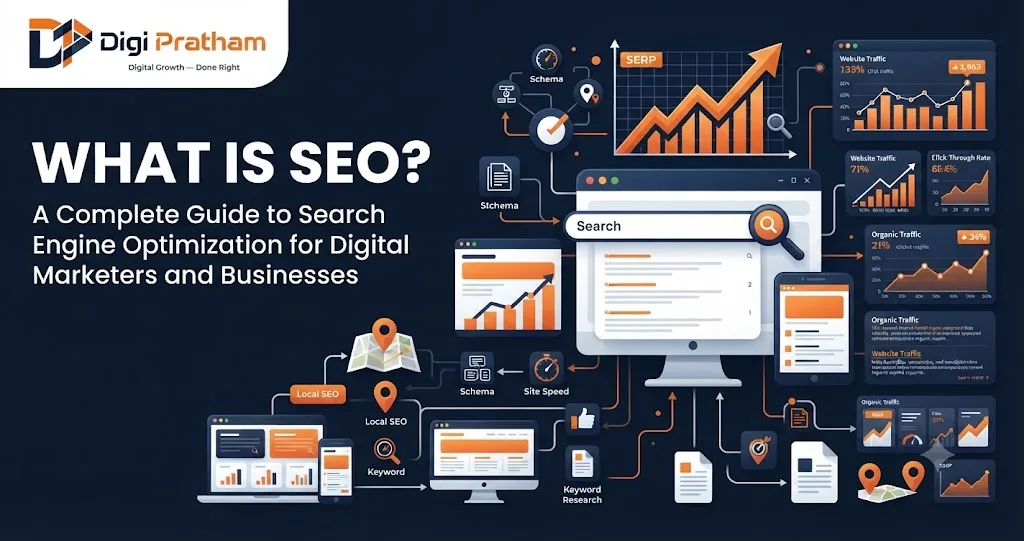
Search Engine Optimisation is the process of improving a website and its content so that search engines can better understand, evaluate, and display its pages for relevant searches. It involves much more than simply adding keywords to a webpage. Website structure, content quality, technical performance, search intent, internal linking, authority, mobile usability, and many other factors can influence organic search visibility.
For digital marketers and businesses, understanding Search Engine Optimisation provides a foundation for building a stronger online presence without depending entirely on paid advertising.
In this complete guide, we will explore what Search Engine Optimisation means, how it works, its major components, why it matters, common mistakes, and how businesses can approach it effectively.
What Is Search Engine Optimisation?
Search Engine Optimisation is the practice of improving a website so that its pages have a better opportunity to appear in relevant unpaid search results.
Search engines need to determine which pages are useful for a particular search. They examine numerous signals to understand the content of a page, its relevance to a query, its technical accessibility, and other aspects of the website.
A properly planned Search Engine Optimisation strategy helps search engines understand:
- What a webpage is about
- Which searches the page may be relevant to
- How the information is organised
- Whether the page can be accessed and crawled effectively
- Whether the content provides useful information
- How different pages on the website are connected
- Whether the website demonstrates relevant authority
The objective is not simply to attract more visitors. The objective is to attract relevant visitors who are genuinely interested in what the website offers.
Search Engine Optimisation vs. Paid Advertising
Search Engine Optimisation and paid advertising can both contribute to online visibility, but they operate differently.
Paid advertising generally involves paying for placement or clicks according to the advertising platform and campaign settings. Search Engine Optimisation focuses on improving a website’s organic visibility.
This does not mean one approach automatically replaces the other. Businesses can use organic and paid strategies together depending on their goals, resources, competition, and customer journey.
How Does Search Engine Optimisation Work?
To understand Search Engine Optimisation, it helps to understand the basic process search engines use.
Search engines generally need to discover webpages, understand their content, and determine which pages are useful for particular searches.
Crawling
Search engine crawlers discover and revisit webpages by following links and using other available signals.
If important pages cannot be accessed or crawled properly, their ability to appear in search results can be affected.
Technical Search Engine Optimisation therefore plays an important role in making website content accessible to search engines.
Indexing
After discovering a page, a search engine can process and store information about it in its index.
Indexing allows the search engine to retrieve the page when it determines that the content may be relevant to a user’s search.
Not every page necessarily needs to rank for every query. The page needs to provide a clear purpose and useful information for the audience it is intended to serve.
Ranking
When someone performs a search, the search engine evaluates relevant pages and orders results according to numerous signals.
Relevance, content quality, website accessibility, context, and other factors can influence how pages perform.
This is why Search Engine Optimisation is not simply about inserting a keyword into a webpage. A successful strategy considers the broader relationship between the searcher’s needs and the information provided by the website.
Why Is Search Engine Optimisation Important for Businesses?
A website can look professional and still struggle to attract visitors if potential customers cannot discover it through search.
Search Engine Optimisation helps businesses work toward greater organic visibility for searches related to their products, services, expertise, or location.
1. It Helps People Discover Your Business
When a business appears for relevant searches, people can discover it while actively looking for information or solutions.
For example, someone searching for a digital marketing company may already have a specific business need. Appearing in relevant organic results can put a company in front of that potential customer without requiring every visit to come from an advertisement.
2. It Supports Long-Term Organic Visibility
Paid campaigns can provide visibility while a campaign is active and funded. Search Engine Optimisation works differently.
The work involved in improving content, structure, technical performance, and authority can continue contributing to organic visibility over time. However, results are not guaranteed, and rankings can change as search engines, competitors, websites, and user behaviour change.
3. It Can Improve the User Experience
Good Search Engine Optimisation often overlaps with good website usability.
Clear navigation, logical page structure, useful content, fast-loading pages, mobile-friendly layouts, and descriptive links can help both visitors and search engines understand a website.
4. It Helps Businesses Understand Their Audience
Search behaviour provides useful insight into what people want to know.
By studying searches and search intent, digital marketers can identify questions, problems, comparisons, and requirements that matter to their target audience.
This information can influence content planning, website structure, service pages, and broader marketing decisions.
The Major Areas of Search Engine Optimisation
Search Engine Optimisation is a broad discipline. It can be divided into several interconnected areas.
1. On-Page Search Engine Optimisation
On-page Search Engine Optimisation focuses on elements that exist directly on webpages.
This can include:
- Page titles
- Headings
- Written content
- Keyword usage
- Search intent
- Internal links
- Image alt text
- URLs
- Content organisation
- Meta descriptions
The goal is to make the page understandable, useful, and relevant to its intended audience.
Content and Search Intent
A page should address what the searcher actually wants.
For example, someone searching “what is Search Engine Optimisation” is likely looking for an explanation. Someone searching for “SEO services” may be exploring providers.
These searches have different intentions, so the content should be designed accordingly.
Keyword research becomes more useful when it is combined with an understanding of search intent rather than treated as a list of phrases to insert repeatedly.
2. Technical Search Engine Optimisation
Technical Search Engine Optimisation focuses on the technical foundation of a website.
Important areas may include:
- Website crawlability
- Indexability
- Site architecture
- Mobile usability
- Page performance
- HTTPS
- XML sitemaps
- Canonicalisation
- Structured data
- Broken links
- Redirects
Technical problems can make it more difficult for search engines to access or interpret important pages.
For that reason, technical improvements should form part of a broader Search Engine Optimisation strategy rather than being treated as a separate activity with no connection to content.
3. Off-Page Search Engine Optimisation
Off-page Search Engine Optimisation involves signals and activities that occur outside the website itself.
One important area is earning relevant and trustworthy backlinks from other websites.
However, the goal should not be collecting as many links as possible. The quality, relevance, context, and credibility of links matter.
Other off-page activities may include digital PR, brand mentions, industry relationships, and activities that help establish a business’s visibility and reputation online.
4. Local Search Engine Optimisation
For businesses serving specific geographic areas, local Search Engine Optimisation can be particularly relevant.
Local optimisation may involve:
- Accurate business information
- Local landing pages
- Business listings
- Reviews
- Location-specific content
- Consistent contact information
- Local search relevance
A local business may need a different strategy from a company serving customers across an entire country.
Search Engine Optimisation and Keyword Research
Keywords remain an important part of Search Engine Optimisation, but modern SEO requires more than identifying popular search terms.
Digital marketers should consider:
- What people are searching for
- Why they are searching
- How specific the search is
- What type of content appears for the query
- Whether the business can realistically serve that search intent
- How competitive the topic is
Primary and Supporting Terms
A webpage can have a primary topic while naturally covering related concepts.
For example, a page about Search Engine Optimisation can discuss crawling, indexing, keywords, technical SEO, content, links, mobile usability, and search intent.
These supporting concepts help create a comprehensive resource without repeating the same phrase unnaturally.
This is why effective Search Engine Optimisation should focus on topical relevance and usefulness rather than mechanical repetition.
The Role of Content in Search Engine Optimisation
Content is one of the central elements of Search Engine Optimisation.
However, publishing large quantities of content does not automatically produce strong organic visibility.
Useful content should be:
- Relevant to the audience
- Accurate
- Original
- Clearly structured
- Easy to understand
- Appropriate to the search intent
- Updated when information becomes outdated
A good content strategy can include educational blog posts, service pages, guides, comparison resources, FAQs, case studies, and other formats depending on the audience.
What Makes Content Useful?
A useful page should answer the reader’s question efficiently while providing enough context to help them understand the subject.
For example, a guide explaining Search Engine Optimisation should not simply define the term. It should explain how the process works, why it matters, what its major components are, and how businesses can approach it.
That creates value beyond keyword placement.
Search Engine Optimisation for Small Businesses
Small businesses often have limited budgets and resources, making organic visibility an important consideration.
Search Engine Optimisation can help smaller businesses compete for searches that are closely connected to their products, services, expertise, or location.
A small business does not necessarily need to target the broadest possible keyword immediately.
A more focused approach may involve creating strong pages around specific services, locations, customer questions, and areas of expertise.
For businesses with limited resources, working with an experienced SEO agency or exploring suitable affordable SEO services can be one way to obtain specialised support. The exact approach depends on the business’s objectives, website condition, competition, and available resources.
Search Engine Optimisation Services: What Do They Include?
Professional search engine optimization services can cover different areas depending on the provider and business requirements.
Typical services may include:
- SEO audits
- Keyword research
- On-page optimisation
- Technical SEO
- Content strategy
- Internal linking
- Local SEO
- Link-building activities
- Competitor research
- Performance monitoring
- SEO reporting
Not every business requires every activity at the same time.
A useful Search Engine Optimisation plan should begin with an understanding of the website’s current condition and the business’s objectives.
Some businesses may need technical improvements first. Others may require better service pages, stronger content, improved local visibility, or a more structured keyword strategy.
How Digital Marketers Can Build a Search Engine Optimisation Strategy
Digital marketers can approach Search Engine Optimisation as an ongoing process rather than a one-time task.
Step 1: Understand the Business
Before choosing keywords, understand the business, products, services, audience, locations, competitors, and objectives.
Step 2: Research Search Demand
Identify relevant searches and examine what users appear to want from those searches.
Step 3: Audit the Website
Review existing pages, technical issues, content quality, internal links, website structure, and performance.
Step 4: Build or Improve Content
Create useful pages that directly address important topics and search intents.
Step 5: Improve Technical Foundations
Resolve technical issues that interfere with crawling, indexing, usability, or performance.
Step 6: Strengthen Website Authority
Work toward earning relevant mentions and links through genuinely valuable content, relationships, PR, and other legitimate activities.
Step 7: Monitor Performance
Track organic traffic, rankings, conversions, indexed pages, engagement, and other meaningful metrics.
Step 8: Refine the Strategy
Search behaviour and competition change. Search Engine Optimisation therefore requires ongoing analysis and adjustment.
Common Search Engine Optimisation Mistakes
Understanding what not to do is just as important as understanding what to do.
Keyword Stuffing
Repeating the same keyword excessively can make content unnatural and difficult to read.
The focus should be on relevance and usefulness rather than achieving an arbitrary repetition count.
Publishing Thin Content
Short content is not automatically bad, but pages that provide little useful information may struggle to satisfy users.
The appropriate length depends on the topic and search intent.
Ignoring Technical Problems
Excellent content cannot compensate for every technical issue.
Poor crawlability, broken pages, indexing problems, or serious usability issues can interfere with organic performance.
Buying Low-Quality Links
Artificial link-building practices can create risks and do not provide the same value as genuinely earned, relevant links.
Expecting Immediate Results
Search Engine Optimisation usually requires time, testing, improvement, and consistency.
Results can vary significantly depending on the website, industry, competition, existing authority, content quality, and technical condition.
How Long Does Search Engine Optimisation Take?
There is no universal timeline for Search Engine Optimisation.
A new website in a competitive industry may require substantial time to establish visibility. An established website with strong authority may see improvements sooner after addressing specific problems.
Factors that can influence the timeline include:
- Website age and authority
- Competition
- Existing rankings
- Technical condition
- Content quality
- Search demand
- Industry
- Geographic targeting
- Consistency of implementation
Rather than expecting a guaranteed number of days or months, businesses should monitor meaningful progress over time.
How Is Search Engine Optimisation Measured?
Organic rankings are only one part of measuring Search Engine Optimisation.
Digital marketers can monitor metrics such as:
- Organic traffic
- Search impressions
- Click-through rate
- Keyword visibility
- Conversions
- Leads
- Revenue attributed to organic search
- Indexed pages
- Backlinks
- Engagement signals
The most useful metrics depend on the business objective.
For an ecommerce business, revenue and transactions may matter most. For a service business, qualified leads and enquiries may be more meaningful than traffic alone.
Search Engine Optimisation and Business Growth
The real value of Search Engine Optimisation comes from connecting search visibility with business objectives.
More traffic is not necessarily better if visitors are irrelevant.
A successful strategy should aim to bring the right audience to the right pages and make it easy for visitors to take the next appropriate action.
That action could be:
- Requesting a quotation
- Calling the business
- Booking a consultation
- Purchasing a product
- Submitting an enquiry
- Reading additional content
- Signing up for a service
Search Engine Optimisation can therefore contribute to a broader digital marketing strategy rather than operating independently.
When Should a Business Consider an SEO Agency?
Businesses may consider working with an SEO agency when they need specialised expertise, do not have sufficient internal resources, or want a structured approach to organic search.
The right service arrangement depends on factors such as:
- Website size
- Industry competition
- Business objectives
- Internal expertise
- Available resources
- Existing SEO performance
Some businesses may handle basic Search Engine Optimisation internally, while others may require ongoing professional support.
For businesses exploring SEO services, it is useful to understand exactly what work will be performed, how progress will be measured, and how the strategy connects with business goals.
At Digi Pratham, businesses can explore digital marketing solutions that include SEO alongside other online growth services.
Final Thoughts on Search Engine Optimisation
Search Engine Optimisation is much broader than adding keywords to webpages.
It combines technical accessibility, useful content, search intent, website structure, internal linking, authority, mobile usability, local relevance, and ongoing analysis to help websites become more visible for relevant organic searches.
For digital marketers, understanding these fundamentals makes it easier to create strategies that focus on users as well as search engines.
For businesses, Search Engine Optimisation can become a valuable part of a broader digital marketing strategy when it is approached realistically and consistently.
There is no single tactic that guarantees rankings. Strong results generally require understanding the audience, creating genuinely useful resources, maintaining a technically sound website, measuring performance, and continuously improving the strategy.
If you are evaluating affordable SEO services or want to understand how professionDigi Pratham